
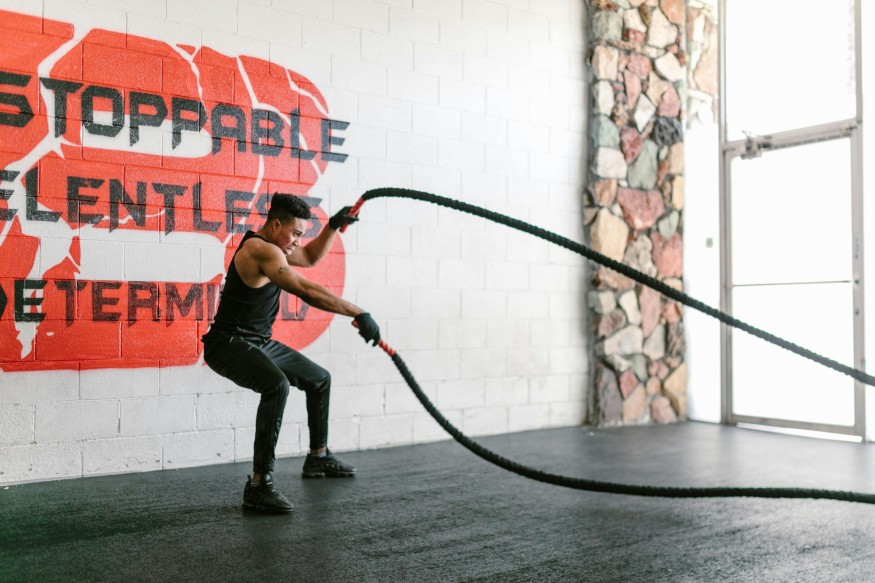
Battle ropes workouts pack a punch for full-body conditioning that blends cardio, power, and endurance into every session. Rope training like this stands out in Battle Ropes Conditioning for its raw intensity and minimal gear needs, making it accessible for home or gym use.
Unpacking Battle Ropes Basics
Battle ropes start with heavy, thick ropes—usually 30 to 50 feet long and 1.5 to 2 inches in diameter—anchored at one end to something sturdy like a pole or rack. You grab the free ends and whip them into waves, slams, or circles, creating resistance purely from your speed and strength. This setup shines in metabolic conditioning because it forces constant motion, spiking your heart rate while engaging nearly every muscle group.
The beauty lies in scalability. Beginners use lighter ropes for endurance focus, while advanced users go heavier for power bursts. No fancy machines required—just space and grit. Muscle & Fitness highlights how these ropes trace back to military drills, evolving into a staple for athletes seeking low-impact, high-reward training.
Key features of battle ropes:
- Durable materials: Often made from poly-dacron blends to handle aggressive slams without fraying.
- Variable thickness: Thicker ropes (2 inches) build grip strength faster; thinner ones allow quicker reps.
- Length options: 40 feet suits most users, balancing portability and workout space.
Core Benefits of Rope Training
Battle Ropes Conditioning delivers metabolic conditioning at its finest, where short, explosive efforts create an afterburn effect that keeps calories torching post-workout. Grip strength surges from the unrelenting tension of holding and manipulating heavy ropes, directly carrying over to deadlifts, pull-ups, or daily tasks like carrying groceries.
Full-body power emerges as arms, shoulders, core, and legs fire together—think double slams that mimic explosive sports moves. Endurance builds through sustained intervals, improving your lactate threshold so you push harder, longer. Unlike steady-state cardio, this hybrid approach mixes aerobic and anaerobic work for well-rounded fitness.
Asphalt Green's beginner guide notes up to 300 calories burned in just 10 minutes for an average adult, underscoring the efficiency. Other perks include better coordination from bilateral arm patterns and joint-friendly stress that spares knees and back.
Benefits breakdown:
- Enhanced grip strength for functional carryover.
- Metabolic conditioning for fat loss and stamina.
- Full-body power without weights or impact.
Muscles Targeted in Battle Ropes Workouts
Rope training hits the upper body hard: deltoids drive overhead waves, lats and rhomboids stabilize pulls, while biceps and triceps handle the slams. Forearms and grip muscles fatigue quickest, turning every set into a grip strength gauntlet.
Core activation stays constant—abs and obliques brace against rotational forces in side-to-side moves or twists. The lower body gets involved through squats, lunges, or jumps paired with rope whips, firing quads, glutes, hamstrings, and calves for explosive power.
This multi-planar work mimics real-life demands, building balanced strength. Fast-twitch fibers power the bursts, while slow-twitch sustain longer rounds, optimizing metabolic conditioning across fiber types.
Primary muscles engaged:
- Upper: Shoulders, back, arms, forearms.
- Core: Abs, obliques, transverse abdominis.
- Lower: Legs, glutes for dynamic stability.
Beginner-Friendly Battle Ropes Exercises
Ease into Battle Ropes Conditioning with these foundational moves, focusing on form to maximize metabolic conditioning without injury.
- Alternating Waves: Feet shoulder-width, slight knee bend. Alternate raising each arm rapidly to send waves down the rope. Do 20-30 seconds. Builds shoulder endurance and intro grip strength.
- Double Slams: Lift both ropes overhead, then slam them to the ground explosively. Engage core fully. 20 seconds on, targets power and full-body coordination.
- Outside Circles: Swing ropes in outward circles, one direction then reverse. 15-20 seconds per side. Challenges rotator cuffs and enhances metabolic conditioning flow.
- Russian Twists: Step side-to-side while whipping ropes low across the body. 30 seconds. Hits oblique hard for rotational strength.
Start with 3 rounds, 30-second rests. Progress by shortening rests or adding jumps.
Read Also: Sandbag Training Strength: Odd Object Training, Farmer Carries & Clean Press for Grip Power
Proper Form and Session Structure
Stand athletic—feet wide, knees soft, core tight—to protect your back during rope training. Hinge at hips for slams, exhale on effort, and loosen grip initially to delay forearm burnout while building endurance.
Structure sessions for 15-25 minutes:
- Warm-up (3-5 min): Light waves or marches.
- Main work (10-15 min): 30s work/30s rest circuits.
- Cool-down (2 min): Slow arm circles, stretches.
Frequency: 2-3 times weekly, paired with strength days. Hydrate heavily; these workouts dehydrate fast due to sweat-inducing metabolic conditioning.
Common pitfalls to dodge:
- Rounding shoulders—keep them down.
- Locking knees—stay springy.
- Rushing form—prioritize control over speed.
Sample Full-Body Routine for Power and Endurance
This 20-minute circuit blends Battle Ropes Conditioning staples for grip strength, cardio, and strength. No equipment beyond ropes needed.
Circuit (5 rounds, 30s rest between exercises, 1 min between rounds):
- Double slams (30s) – Power focus.
- Alternating waves (30s) – Cardio build.
- Outside circles (30s/side) – Shoulder endurance.
- Slam jumps (30s) – Lower-body metabolic conditioning.
- Russian twists (30s) – Core grip challenge.
Total: Around 250-350 calories burned, scaling with intensity. Track grip fatigue as your progress marker—ropes feel lighter over weeks.
Maximizing Gains in Grip Strength and Metabolic Conditioning
Grip strength amplifies through sustained holds; add towel wraps over ropes for extra challenge. Metabolic conditioning peaks in HIIT-style intervals—20s max effort/10s rest—to skyrocket EPOC (excess post-exercise oxygen consumption).
Pair with nutrition: Post-workout protein and carbs refuel glycogen depleted by rope training. Progress by thickening ropes or extending work periods.
TRX Training's 30-minute battle rope workout emphasizes variety—mix unilateral waves for imbalances. Rotate exercises weekly to prevent plateaus.
Pro tips:
- Anchor low for slams, high for waves.
- Film form for self-review.
- Scale ropes: 1.5" for speed, 2" for brute strength.
Rope Training Essentials for Long-Term Results
Battle Ropes Conditioning thrives on consistency, delivering noticeable grip strength jumps in 4-6 weeks alongside leaner physique from metabolic conditioning. Home setups work with door anchors; gyms offer variety.
Invest in quality ropes to avoid fraying—check reviews for longevity. Combine with mobility work to counter shoulder tightness. This rope training approach keeps routines dynamic, fueling power and endurance for sports, hikes, or daily vitality.
Frequently Asked Questions
1. Are Battle Ropes Good for Beginners?
Yes, battle ropes suit newcomers because intensity scales easily—start slow with shorter intervals to master form before ramping up speed. They build confidence through low-impact moves that still deliver full-body metabolic conditioning without overwhelming joints.
2. What Muscles Do Battle Ropes Work?
Battle ropes target shoulders, arms (biceps, triceps), upper back (lats, traps), core (abs, obliques), and legs (quads, glutes) in most exercises. Grip strength gets hit hardest from constant rope tension, enhancing forearms and overall handling power.
3. How Long Should a Battle Rope Workout Last?
Most sessions run 8-20 minutes using intervals like 20-40 seconds work followed by equal rest, perfect for metabolic conditioning without burnout. Beginners aim for 10 minutes total; advanced users extend to 30 minutes across multiple circuits.